
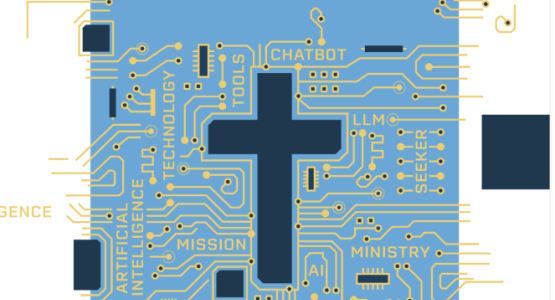
Ministry in the Age of AI
Story by Amanda Blake
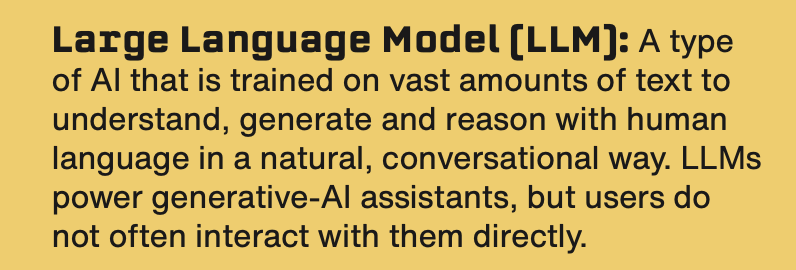
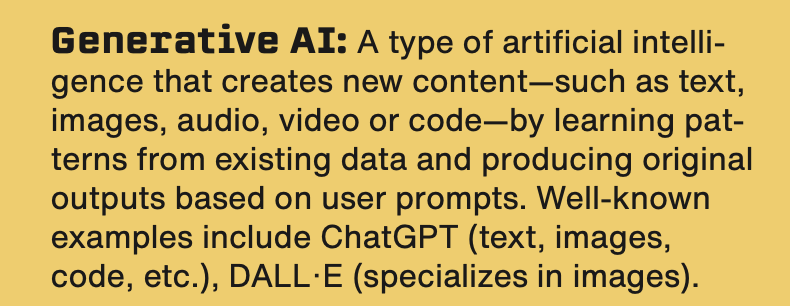
In 2022, OpenAI’s release of ChatGPT sparked an ongoing surge in generative artificialm intelligence (AI), a technology that has triggered both excitement and anxiety. Many Seventh-day Adventists are embracing AI, intent on harnessing this new tool to spread the gospel.
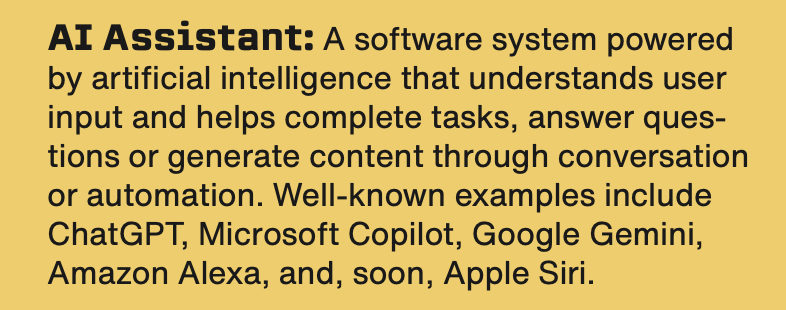
Prior to ChatGPT, in 2017, the Adventist-run Nuevo Tiempo Communication Network released Esperanza, an AI for personalized Bible studies. In 2023, an AI Bible-assistant robot named “Adam” appeared at the Global Adventist Internet Network Asia conference. A year later, the Korean Union Conference delivered its own AI chatbot, Adventist Church GPT (available only in South Korea), and, in 2025, the South American Division launched its AI platform, 7chat.ai.
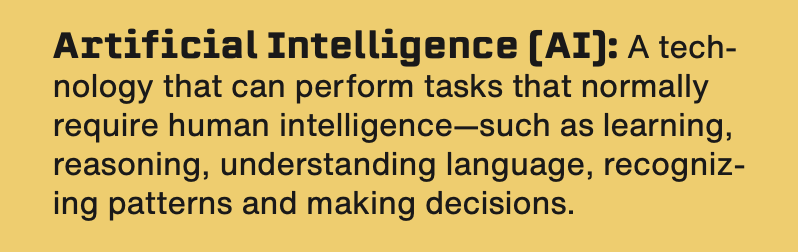
The General Conference (GC) is now working on an AI “question-answering service” called Adventist Knowledge AI (AKAI).
 Inside the GC's AI Initiative
Unlike ChatGPT and Google Gemini, AKAI will not draw from the broader internet, explains GC Chief Information Officer Richard Stephenson. Instead, it will draw only from the GC’s verified sources and use a custom model to generate cited answers.
“We have a sacred responsibility to ensure that when people receive answers about our faith, those answers are grounded in the Bible and legitimate, verified Adventist sources, not algorithmic invention,”Stephenson explains.
Project leaders aspirationally hope to have a working demo by July 2026, in time for the GC’s Digital Strategy for Mission Convention.
“Initially, [AKAI] will be available to church institutions and their developers to integrate into various applications,” Stephenson says. “Ultimately, the goal is to make this accessible to researchers, employees, church members, and, eventually, to seekers—those interested in learning about our faith.”
He notes that the GC will terminate this project if AKAI is “unworkable, unreliable or fails to consistently provide fact-based answers that are representative of our church.”
Many are developing Adventist AIs because general AI tools like ChatGPT do not always provide accurate answers to church-related questions, says Adam Fenner, vice president of digital media and director of Adventist Learning Community (ALC) for the North American Division (NAD). Stephenson confirms this motivation for the GC, adding that the AKAI project aims to make the church’s “present truth” more accessible.
Fenner adds that another solution to this problem is improving the church’s digital footprint with less broken links, higher quality photos and more up-to-date software so that the more popular AIs will gather information from Adventist sites.
Though many church organizations are embracing AI, there is still some resistance.
Greg Iverson, director of Information Technology Services (ITS) for the NAD, observed the Adventist Church reacted to AI in the same way it reacted to the internet, reflecting a pattern many organizations, religious and nonreligious, follow: "Maintain status quo,—until you can’t anymore, because this new technology has become a universal reality.”
Smart Tools for Sacred Work
Kriston Vardiman, social media manager for Potomac Conference’s Fredericksburg (Va.) church, often uses ChatGPT for social media captions, and also uses Adventist tools to ensure her writing aligns with Adventist beliefs.
“There is only one of me, and AI tools save a lot of time while helping me produce consistent, high-quality content,” she says, adding that on a typical week she uses tools like ChatGPT, Claude, Otter, ElevenLabs, OpusClip and AI features within Canva and the Captions apps.
With their permission, Vardiman once fed photos of members to an image-generation tool to depict the 12 minor prophets. Her effort made an impact on Fredericksburg’s pastor, Paolo Esposito.
“Inspired by Kriston, I also have made use of AI tools, such as NotebookLM, ChatGPT and Otter on a regular basis for sermon research and preparation, creating resources like small group study guides and more,” says Esposito.
Fenner has also found that AI is a powerful research assistant, writing enhancer, sounding board and “gap examiner”—a tool that anyone working with ideas can use to identify the points they’re missing in their messages or arguments.
From a theological standpoint, AI can serve as an excellent dialogue partner, specifically for those struggling with doubts they feel discouraged to discuss in a church setting. However, this function only works if the person uses AI carefully and verifies results. God can work through a robot, Fenner says, but AI, in and of itself, is not an omniscient knowledge source.
Iverson uses AI assistants to generate understandable overviews of unfamiliar topics and to gain different points of view.
“[AI] tends to be overly affirming,” he says, “so I don’t trust it. But there’s times where you have an idea and you ask just to see if your idea is crazy or not.”
With its ability to produce high-quality, editable products like Bible studies, marketing materials and video clips in mere minutes (or seconds), generative AI is a game changer for ministries.
AI is also a potential help to “people that invest huge amounts of time and energy into generating evangelism slides and programs and all the corresponding materials that go with that. … [With AI you] can whip those out in a hurry, and they’ll be pretty good,” Iverson explains.
 Jai Roza, the California-based creator of Eden’s Conflict—a card game that teaches players about spiritual warfare—uses AI to create sketches for graphics, refine how he explains biblical concepts to gamers and find insights that radically deepen his sermons. From his Eden’s Conflict website, he also releases AI-generated music with lyrics directly from Scripture. He says that AI helps him reach his goals.
“A lot of nuance in the way I present things is because of the conversations I have with AI,” he explains.
“For as short a time that AI has been around,” Roza adds, “I guarantee you it ‘knows’ the Bible better than any of us.
Now, it can’t have that spiritual, deep connection with [the Bible] like you and I can, right? But it can explain, examine, comprehend, turn things around and challenge us.”
Deepened Bible Study
“The Bible is a little bit difficult to access. It really is,” admits Dave Gemmell, a retired pastor and a former associate director for the NAD Ministerial Association. “This last year, 2025, I added another tool, [ChatGPT], to my collection … to see if this revolutionary technology could add to my existing toolkit, to help me understand this intriguing collection of literature.”
Constantly impressed by technology, he says, “ChatGPT can produce what would have taken me a month or two in 15 seconds.”
The technology can also make learning more fun.
Seeking a memorable way to teach his grandson’s kindergarten Sabbath School class about Joseph and his coat of many colors, Gemmell prompted ChatGPT to create multiple Dr. Seuss-style scripts of the story, each one more ridiculous than the last. As Gemmell read the scripts, the kids acted out the stories.
“By the end, they were just having a grand old time,” he recalls, “but they learned the story.”
Faithfully Navigating an AI World
A recent poll found that four out of 10 Americans are concerned about the environmental impact of AI usage. Many are also worried about its impact on education.
“I think part of the fear is the students are cheating, and [teachers] have to make big adjustments, and that’s hard,” says Desmond Suarez, a teacher at Potomac Conference’s Richmond Academy (Va.), referring to AI.
But there’s hope. Suarez, who helps “demystify” AI for teachers at seminars and on the ALC-sponsored Edtech Unpacked podcast, says there are methods for combating AI cheating like assigning higher grade values to observable, multifaceted assignments and learning AI’s writing style for oneself by generating pseudo papers. He advises teachers and parents: Use AI, take note of its patterns, then use it with your students and discuss the ethics.
“AI is a tool to help you do things,” Suarez says. “It shouldn’t do it for you. If it’s doing it for you, you’re using it wrong.”
Suarez also notes that some are fearful about the long-term effects of how AI is changing the “way we think and learn,” he says, explaining it’s too early for real research on how it’s impacting us.
“I just don’t know what that effect is. ... Is this making our students less intelligent and less able to learn new skills, or is it equipping them, [in the same way that a calculator or computer helps us], to reach higher knowledge and higher skills than we could have without it? There’s probably a little of both.”
One of those benefits is making everyday learning more engaging. Through vibe coding, Suarez has created multiple apps, including one that converses with his students and then sends PDFs of those conversations back to him.
Bypassing the Spirit?
Many Adventist organizations have provided guidelines for AI use, but there are still a lot of unknowns.
It’s hard to know where to draw the line between responsible AI use and misplaced spiritual dependence, says Gemmell. “But we must remember: AI is not a person. AI does not have any spirituality, does not have any faith, AI doesn’t know how to pray. AI is not a believer. So, putting those things in our back pocket, I think it helps us not take AI seriously in any of those regards.”
He adds that the Holy Spirit works by convicting, reminding, illuminating and transforming. “The Spirit works with human minds, not instead of them.
That means the Spirit can work [through] reading a book, listening to a sermon, reading Scripture and [studying] with tools. There is a crucial distinction.
Scripture never forbids tools,” says Gemmell. “If God can speak through a donkey, he’s not threatened by a large language model.”
Iverson asserts, “I think we have to be careful when we start drawing lines. ... We talk about ‘Scripture alone,’ but the truth is, Scripture alone isn’t very valuable. It’s the Spirit working through the Scripture, right? It comes down to the Spirit, and so all we can do is pray for the Spirit’s guidance and then use the tools that we have—and AI is now one of those tools.”
Efficiency Vs. Love
Fenner worries that an increased focus on AI may lead church entities to prioritize efficiency over long-term discipleship. He considers it an excellent research assistant, sounding board and theological dialogue partner, but he is adamantly opposed to AI working on the “front end” of ministry.
“If a person is interacting with a person now in ministry, never replace that person with an AI,” he advises.
Iverson believes some ministry tasks, like content generation, will be handled by AI. But he doesn’t foresee the church replacing employees with AI.
AI is a powerful tool, Gemmell adds, but it does introduce new dangers. He advises great caution (especially for pastors) as the technology is still young and the line between using AI as a tool and using it as a crutch—leaning on it so heavily one loses the capacity to perform tasks alone—is still unclear.
Echoing Fenner, Gemmell explains the following scenario to emphasize the eternal importance of walking beside people in their spiritual journeys: “I can ask AI to write a sermon on a particular text. It can generate a sermon in 15 seconds that is really, really good and accurate to Scripture and with good theology and, because [ChatGPT] knows I’m an Adventist, it will be true to my Adventist values … but it won’t land.
“Because the thing that AI does not have in the large language model is my congregants. AI has not sat beside the lady that has just been diagnosed with cancer or the young man whose wife has just lost a baby or the couple that is going through marital conflict or the unemployed individual or the person that’s losing their faith.”
With all these complexities, it still brings much potential for ministry.
Stephenson views AI as a partial fulfillment of the increase in knowledge mentioned in Daniel 12:4.
Roza sees it as both a weapon for the devil and an opportunity to amplify the truth.
“You and I have no excuse to not be able to gain tenfold knowledge, tenfold insight, tenfold sharing tools,” Roza says. “This is the new norm … and if we as Christians don’t learn how to use these tools, our voices will also be drowned out tenfold in the coming years.”
 Read Articles from the May-June 2026 Visitor:
- Ministry in the Age of AI
- Editorial: It Only Takes a 'Scott'
- 20 Tips for Learning and Using AI
- Adventist Media, Mission and Technology: A Timeline
- Columbia Union Gives Scholarships to Upcoming Pastors
- Chris Araujo Moves From Columbia Union to North American Division ITS
- José D. Espósito Voted Vice President for Evangelism and Multilingual Ministries
- Empowering Children Storytelling
- Rethinking Greeting Time
- 46 Columbia Union Pathfinder Bible Experience Teams Place First
- 43 Columbia Union Conference Teams Place First at NAD Level PBE
Add new comment