
What Atholton Was Meant To Be
Story by Beth Villanueva
In the fall of 2020, after COVID-19 had temporarily shut down schools across the globe, Atholton Adventist Academy (AAA) reopened with just 150 students. A few years prior, enrollment had peaked at 235. When Miya Kim accepted the role of principal in 2020, families reeling from the crisis were asking whether it was safe or economically sound to enroll their children at all. As a school founded in 1958 and grown from one teacher into a healthy junior academy, the Atholton community in Columbia, Md., decided it was time to answer a pressing question: What is AAA meant to be?
The school board chose to take honest stock, not only of finances and enrollment, but also of identity. AAA brought in an educational consultant and spent a year gathering input through focus groups and surveys.
What families said was galvanizing. As a junior academy, the community reported AAA did not fully serve their needs. If the school offered a full academy, 85 percent said they would keep their children there through 12th grade. Otherwise, only about half planned to stay through ninth and 10th grades. Many living in the Baltimore area noted that other Adventist senior academies were too far away. “I have been praying for you to extend to 12th grade for years now,” one parent wrote. “It will be a great blessing to our family.”
For years, the Atholton church—the school’s single constituent church—was also affected by families moving their membership to churches connected to a four-year Adventist high school. For both church and school, the path forward became clear: Pursue senior academy status.
“This has been a dream since the mid-1960s when I was a student at Atholton Junior Academy,” says Victor Elliott, AAA school board chair, explaining that at that point, “Atholton church chose to give up ninth and 10th grades to support Highland View Academy as it began.”
Over the six years following the consequential vote, AAA worked toward their goal. They added teachers with high school certifications, built courses leading to a college preparatory diploma, added a registrar, partnered for a time with Griggs International Academy to offer 11th and 12th grades on campus, and planned a new building for the youngest students.
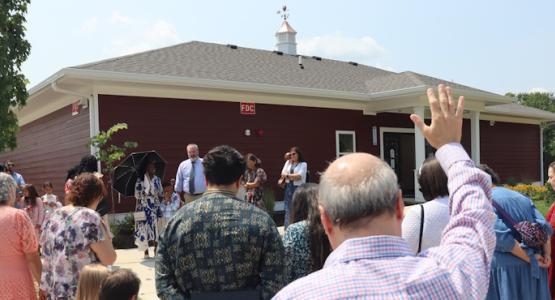
In fall 2025, after review by the Offices of Education in the Chesapeake Conference, the Columbia Union Conference, and the North American Division, AAA was granted candidacy status for the 2026–27 school year. The new Early Childhood Learning Center building opened this fall, and, for the first time, the high school has a dedicated space of its own. Enrollment now stands at 254—more students than AAA had before the decline began.
Looking back, Kim says, “God carried the school further than anyone could have imagined, from a single classroom in 1958 to a campus that now transforms lives from pre-kindergarten through high school.”
Add new comment