

Wonders of His Love
If Christians believe in the miracle of God’s Son—who came to earth in human form—why is it hard to believe that miraculous stories can still happen in our everyday lives?
Story by Tompaul Wheeler
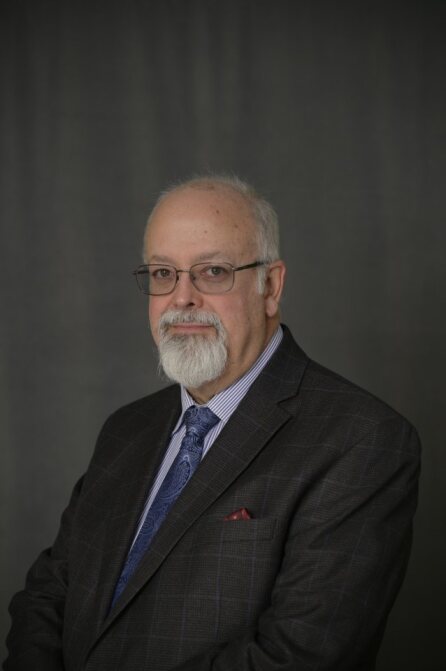 Tim Bailey stood under an muddy river, feeling every bit of the sunny day’s nearly 100-degree heat. It had been a long, intense evangelistic series in India and, as Bailey led out in baptisms, he was exhausted. With nearly 1,500 names to read, 1,500 Bibles to gift and 1,500 certificates to sign, it was easy to neglect the animated woman who was tapping on his arm.
Under five feet tall, perhaps 70 years old, the woman kept touching her face as she tried to get Bailey’s attention. “She was wanting something,” Bailey remembers, “and I kept telling [the other workers], ‘Please take her. I’ve gotta keep at this so we get this done.’”
The woman finally moved on and got in line for baptism. Bailey might not have thought anything more of her if not for what happened next.
“When she came up out of the water, she jumped up with her hands in the air and started shouting,” Bailey remembers. “All the pastors start whooping, hollering and yelling, ‘Hallelujah, hallelujah!’ They were all cheering.”
Bailey’s interpreter explained to him what was happening: “She used to be blind," the man said, "but now she can see."
After the baptisms finally concluded, Bailey sat with the village elder and the woman. He learned that she’d been blind for about 20 years. Now her eyes, which had been cloudy and white, shone healthy and bright—and she could see.
The local pastor and village members all testified that the woman had been blind for years, and now was suddenly healed. She had hoped Bailey would pray for her, then asked God if He would heal her when she was baptized.
Looking back, Bailey wishes he had stopped and prayed when the woman came to him. “But,” he says, “I think I got exactly what the Lord wanted me to see.”
Today, Bailey is the president of the Mountain View Conference. “That was a pivotal, molding point in my life,” he says, one which transformed his work as an evangelist. “I started doing my evangelism in the United States with the same fervency [as] over there.
I was like, if God can do that there, He can do it here.
It may look different, but it’s just as vitally important.”
It's Sure Be Nice
 Penny Estes Wheeler, a retired Review and Herald author and editor who attends Chesapeake Conference’s Willow Brook church in Boonsboro, Md., remembers a time when she prayed, offhandedly, for a more “down-to-earth” miracle.
When her husband, Gerald, had to move ahead of the family from Nashville to Maryland, she shared her worries with God. It’d sure be nice to have a dog to keep us company while he’s away, she thought. “What I’d really like is a collie,” she mused to God. “They’re so gentle.”
She never straight-out asked for a dog; instead, she just told God what she’d like. So, when a collie appeared at her back door wearing a flea collar, she reasoned it had a home to go back to. She told her kids to leave it be. But the dog stayed, patiently waiting, until they finally fed her and invited her in.
For the next few months, Gretel, as they named her, kept the Wheelers company.
She slept by their beds, cuddled with the kids and barked protectively at strangers. In fact, the family was making plans to take Gretel with them on their move. Then one day, as Gretel played with the kids in a ravine, a neighbor girl walked up, and called out, “Lassie!”
Gretel, or Lassie, had been this girl’s family dog for nine years. The girl explained that Gretel had started disappearing for a few days at a time, coming home to eat, then leav ing again. But watching Gretel play with the Wheelers, she said she didn’t mind if Gretel stayed with them until they moved because she seemed so happy.
A few days later, the Wheelers moved, waving goodbye to Gretel, their temporary, God-sent dog.
“At any time, you don’t know what God will do for you,” Wheeler says, looking back. “And sometimes you don’t even know it’s happening until later.”
 Angel in a Scarf
When Blossom Gantt, a member of Potomac Conference’s Beltsville, Md., congregation, was 8 years old, she believes she met her angel on a busy street in Bangkok.
Gantt’s family moved to Thailand when her father took a job there teaching English. While traveling with her family one day, she stepped off a bus and checked to make sure it was safe to cross the street. She had just stepped off the curb when a taxi came out of nowhere and ran over her left foot.
Although the taxi threw her off her feet, Gantt felt herself being placed gently on the ground. She sat in shock as a crowd packed around her. As she waited for her parents to reach her, she felt a tap on her shoulder.
The woman was tall, blonde and wore a colorful scarf. That last detail stuck out because scarves weren’t commonly worn in Asia.
The woman handed Gantt a stack of towels and rags. “I remember taking them from her without really thinking about it,” Gantt says. “I thought, Oh, maybe I should say thank you. But I look up, and I don’t see her anywhere. She’d just disappeared.”
 The taxi driver drove Gantt and her parents to the hospital. Gantt’s leg was bleeding profusely, and she noticed that every bone in her sandaled foot was crushed. Remembering the rags, she handed them to her dad. He wrapped her foot and leg and used them to soak up the blood, wondering aloud, “How does she have all these rags?”
A team met them at the hospital with a stretcher. “We’re going straight to an operating room,” a doctor informed them. “We have to amputate her foot because the bones are crushed. There’s really nothing there.”
Gantt’s mother insisted the doctors take another look. As the doctors took X-rays, her parents prayed, begging God to intervene. Again, the doctors said they would have to amputate, and her parents asked if there were any more tests they could perform. The surgical team did bloodwork, continued prepping for surgery and still said they needed to remove the foot.
Gantt’s mother asked for one more moment so that the family could pray. The team agreed to two more minutes. Gantt’s parents anointed her foot and continued praying as the team took her to check for other injuries—specifically her head. The staff could scarcely believe she hadn’t hit her head on impact.
The team brought Gantt back out to her parents. “The doctor just looks at my parents,” Gantt remembers, “and goes, ‘I don’t know how this is possible, and I don’t know what’s happening right now, but we can save your daughter’s foot. It does not have to be amputated.’”
Gantt left the hospital with her leg in a cast and both feet still intact. In just under a year, she was walking again. The scar from the tire’s imprint got smaller as her foot grew, but it’s still visible today—a reminder of God’s miracle.
“I truly believe I met my angel that day,” Gantt says. “That was the turning point of my spirituality. To [realize] there is a God that exists and angels are there, that God surrounds us at all times. He watches over us.”
With the holidays approaching, Gantt reflects on her spiritual walk. “I think the world is becoming a much darker place,” she says. “There’s a lot of beauty, for sure, but sometimes it’s easy to lose sight of why we celebrate the birth of Jesus and what that signifies. I think we have to work a little bit harder [so that] when we sing ‘Joy to the World,’ we actually are singing with joy. ‘Angels We Have Heard on High,’ all these things, are not just songs anymore.”
God Does the Impossible
 Jeremy Garlock (pictured with his translator, Pamela Davenport), Mountain View Conference youth director, education superintendent and a pastor at the Boulevard church in Charleston, W.Va., has also experienced several miracles, including one while preaching on a mission trip in Ecuador.
He says that a woman tasked with interpreting his Sabbath sermon was nervous because he spoke fast and used a lot of idioms that don’t translate easily.
“That got me nervous, because that’s how I speak,” he says.
As he preached, Garlock spoke a few sentences in English and paused for the interpreter’s turn to speak. After a few minutes, however, he noticed the “amens” from the audience started coming before the interpreter spoke in Spanish.
Later that day, Garlock used Google Translate on his phone to speak with two members of his mission team who had come from Mexico. “Why can’t we understand you anymore?” they asked. “What do you mean?” Garlock asked through his phone.
“Halfway through your sermon, you began speaking in Spanish,” they told him. “I can tell you, I did not speak in Spanish,” Garlock now says. “I most definitely was speaking in English. But God, apparently, had someone He wanted to reach in some special way.”
Garlock still doesn’t know why God blessed His sermon with such a miracle. People were baptized at the end of the mission trip, but the supernatural intervention remains a mystery.
“On mission trips, we tend to see these things more than we do in our normal, everyday lives,” Garlock reflects. “When we go on mission trips, we’re taking our marching orders from the Lord.” He muses that maybe more miracles occur on such trips or in “mission fields” because “God [is] paving the way for us to do the work He has called us to do.”
Garlock suggests that maybe church members experience fewer miracles “at home” because of the strong focus on doctrine. “There’s such an emphasis on knowing the ‘right thing’ that they stop living in the experience of walking with God. ... If you look for truth only, minus experience … then we won’t have the experience …, [but] if we are looking for the experience with God, then He shows up.”
Garlock, who has several other miracle stories that can be found at columbiaunionvisitor.com/2026miracles (coming soon!), says that when he became a Christian, he told God, “If I’m gonna become a Christian, I want to live a life with You that looks like the people in the Bible. I want to expect You to show up every day.”
He adds that most of the time these experiences are small. “But,” he adds, “when you have that daily experience with Him, then when these bigger opportunities for these bigger things happen, you are amazed … but you’re not surprised that God showed up because He showed up every day anyway.”
Add new comment