
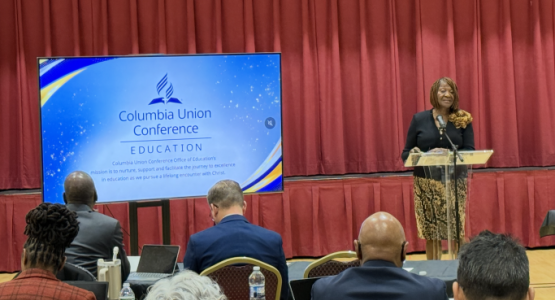
Office of Education Analyzes Challenges and Growth Potential in Adventist Schools
Story by V. Michelle Bernard
At the start of the 2025-26 school year, enrollment at Early Childhood Education (ECE) centers across the Columbia Union Conference experienced an enrollment increase from 380 students to 505 students at Columbia Union’s eight stand-alone ECE centers. PK-12’s enrollment, however, declined from 5,742 students last year to 5,631at the union’s elementary schools, junior academies, boarding academies and senior academies.. Higher education enrollment at Washington Adventist University in Takoma Park, Md., and Kettering College in Ohio also decreased from 1,402 students to 1,298 students.
Challenges Facing the Adventist Education System
In the Office of Education’s report to the Columbia Union Board of Education (CUBO) and the Columbia Union Conference Executive Committee, the team noted three challenges facing the education system that call them to “faith and collaboration”:
--Financial sustainability: Aging church populations, limited subsidies and tuition-dependent models strain school budgets and impact long-term viability.
--Alignment between church and school: Inconsistent support, lack of shared vision and limited collaboration hinder unified ministry.
--Enrollment and staffing pressures: While rising enrollment is seen in select schools, other areas are witnessing decline in enrollment, challenges in teacher recruitment and retention, and outdated facilities that affect stability and growth.
Factors for Growth
The team also noted factors for growth, such as:
--Financial Accessibility: Programs like vouchers (in Ohio), scholarships and donor partnerships, as well as evangelism funds
--Program and Academic Quality: Including reliable instruction, mentorship and innovative programs
--Spiritual Culture and Spiritual Life: A discipleship focus, positive campus culture and a strong focus on strengthening the spiritual lives of students
--Leadership and Collaboration: Aligned vision, coordinated recruitment, storytelling and communication
--Infrastructure and Technology: Facility upgrades, digital resources and sustainable resource use
Ruth J. Nino, associate director for elementary education, says she is excited about the growth factors because “they demonstrate areas of thriving school communities across the Columbia Union. Select schools are witnessing how the strengthening of financial foundations helps to ensure stability, long-term sustainability and the opportunities that can arise to strive toward the mission yearly.”
She adds, “As schools also enhance their programs and academic excellence, we are able to see what these financial investments can accomplish and the impact they have on students’ learning. In addition, through cultural and spiritual life experiences, school communities can grow and have opportunities to develop a lifelong encounter with Christ.”
These factors demonstrate how mission-driven growth is possible, she says, adding, “Adventist schools are fostering strong spiritual environments with students committing to Jesus and school cultures grounded in the love of Jesus, respect and discipleship.”
Add new comment